
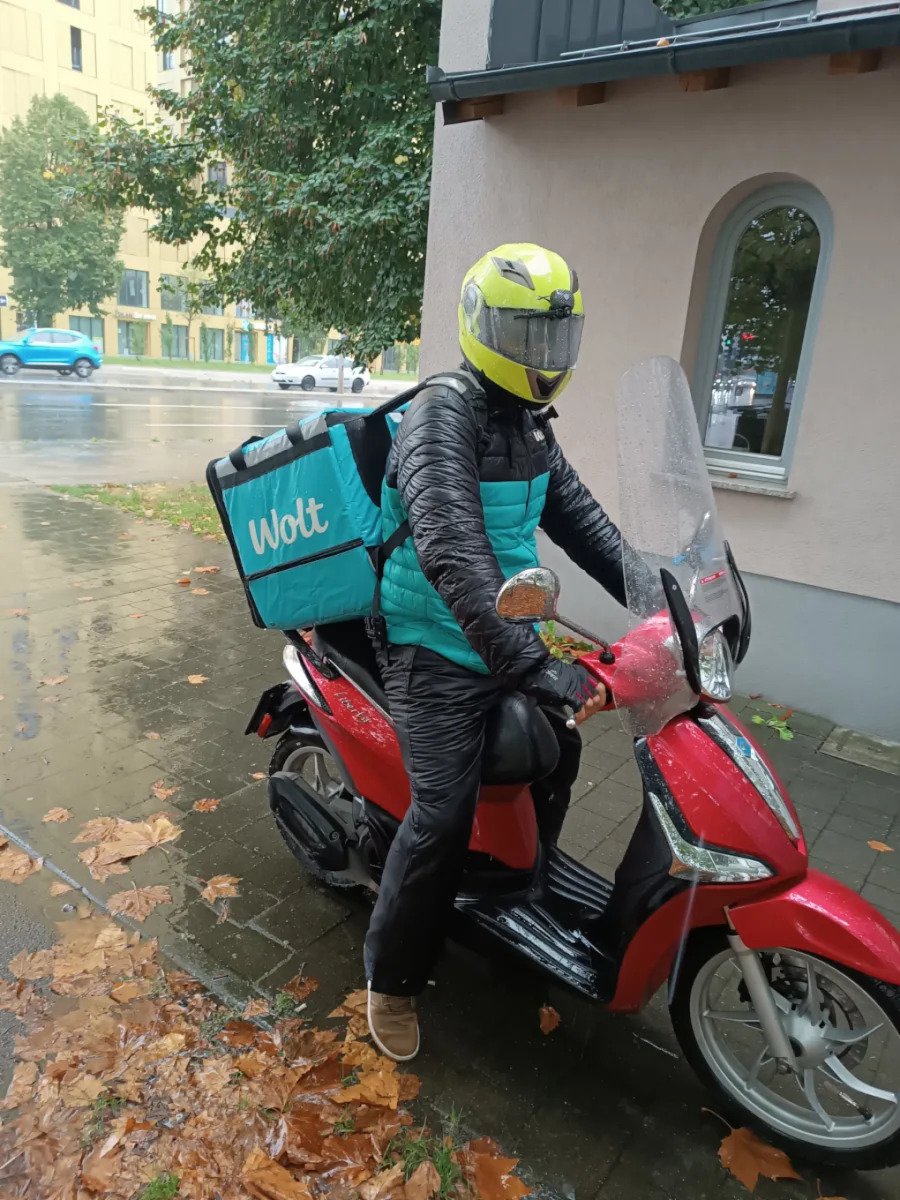
A delivery order does not wait for clear skies. But motorcycle delivery riding in rain changes the job immediately: car tires throw dirty spray, painted intersections turn slick, and a visor covered in droplets can hide a brake light until it is too late. The goal is not to ride fast through bad weather. It is to stay visible, predictable, and in control from pickup to drop-off.
Rain turns routine delivery routes into risk zones
The danger is rarely just the rain itself. It is what rain does to the road and your ability to read it. Oil rises to the surface during the first minutes of a shower. Lane markings, crosswalk paint, steel plates, bridge joints, leaves, and manhole covers lose traction. Potholes fill with water, so their depth becomes impossible to judge at a glance.
Delivery riders face an extra pressure: frequent stops. You accelerate from curbs, filter through slow traffic, brake for addresses, turn into driveways, and pull away again. Every one of those transitions demands smooth throttle, brake, and clutch control. A rushed input can break traction when the surface is wet.
Visibility is the other problem that compounds everything. Rain on the outside of the visor distorts headlights, traffic signals, and road edges. Fog on the inside blurs the same view from a different direction. Truck spray can cover a visor in a gray film in seconds. If you cannot clearly see what is ahead, you cannot build the space and time needed to react.
Set up before the first drop falls
Rain riding starts before you leave the pickup point. Check the forecast, but also look at the sky and the roads around you. A short storm may be more dangerous than steady rain if it follows a dry day and brings oil to the surface. If conditions are severe enough to overwhelm visibility, delay the ride or take shelter. No delivery is worth riding blind.
Your bike needs more attention in wet weather. Confirm tire pressure when the tires are cold and inspect tread depth and condition. Worn tires shed water poorly. Test both brakes at low speed after setting out, especially if the bike has been parked in rain. Make sure your lights, turn signals, and brake light are working. In a storm, other road users need every possible chance to see you.
Wear waterproof outer layers that do not restrict your shoulders, wrists, or knees. Wet gloves reduce feel at the controls, so choose a pair with dependable grip and bring a dry backup if your shift is long. A full-face helmet matters because it protects more of your face from rain and wind, but only when the visor stays usable.
A clean visor is the baseline. Dirt, bugs, old product residue, and fine scratches scatter light and make night rain worse. Anti-fog treatment or a compatible pinlock-style insert can help with interior condensation. Rain-repellent coatings may improve water beading for some riders, but they are not a complete answer. They need reapplication, can smear when dirty spray hits, and work differently at low delivery speeds than they do on an open highway.
Keep your hands on the controls
The instinct to wipe a wet visor with a glove is understandable. It is also a poor trade. You lose a hand from the handlebar just when wet pavement demands your best control. A glove can smear grime across the visor, and a finger wiper clears only a small patch for a moment. Tilting your head to shed drops creates its own distraction and does nothing for fog or road spray.
For riders who work through regular rain, a powered visor wiper is a more direct option. BIKERGUARD's compact electric system mounts to a compatible full-face helmet visor rail and lets the rider clear water with a wireless control while keeping both hands where they belong - on the handlebar. Manual and automatic wipe modes are designed for the reality of changing rain intensity, mist, and vehicle spray.
The point is not a gadget. It is reducing the number of tasks competing for your attention. You still need to slow down, scan, and ride for traction. But you should not have to choose between a clear view and a secure grip on the bike.
How to ride a wet delivery route
In rain, create more room than usual. Increase following distance until you can see around the vehicle ahead and have time to brake progressively. Avoid riding directly behind buses, vans, and trucks when possible. Their tires throw the heaviest spray, and their size blocks your view of traffic changes.
Look farther ahead than you think you need to. Scan for brake lights, standing water, shiny pavement, and cars waiting to turn. Your eyes should keep moving between the far path, the immediate surface, mirrors, and side streets. Do not stare at puddles or obstacles. Look where you need the motorcycle to go.
Use smooth control inputs. Roll on the throttle instead of snapping it open. Apply the brakes progressively and earlier, allowing the suspension and tires to settle before adding more pressure. If your motorcycle has ABS, it is a valuable safety net, not permission to brake later. If it does not, wet-weather braking requires even more discipline and a longer buffer.
Cornering calls for patience. Slow down before the turn while the bike is upright, choose a wide, clean line, and avoid sudden lean or acceleration. Try not to brake hard or change direction on paint, metal covers, or pooled water. If you must cross one, straighten the bike as much as practical and keep your inputs neutral.
Do not chase the fastest route if it includes known flood-prone streets, steep descents, rough pavement, or high-speed roads with heavy truck traffic. A slightly longer route with better lighting, fewer intersections, and cleaner pavement can be the faster choice once you account for safe speed and fewer stressful stops.
Delivery stops deserve their own routine
Most delivery incidents are not dramatic high-speed crashes. They happen while pulling into an unfamiliar apartment complex, turning around near a curb, or putting a foot down in a puddle. Treat each stop as a traction check.
Approach addresses slowly. Watch for slick driveway sealant, wet gravel, painted parking lines, fallen leaves, and oil near dumpsters or loading areas. Put your foot down only after you have identified solid ground. Avoid parking where runoff will pool around the tires or where a car can back into you without seeing the bike.
Keep your phone protected and plan the next move before you roll. Stop under cover when available to check the address, adjust navigation, clean the visor, or handle messages. Trying to read a screen while balancing a bike in rain creates the kind of divided attention that causes preventable mistakes.
If your visor fogs after a stop, address it before moving into traffic. Open the approved venting, use your anti-fog setup, and clear the exterior moisture. A few seconds at the curb is better than entering a busy street with a blurred view.
Know when conditions have crossed the line
Professional riding does not mean accepting every condition. Stop riding when standing water hides the road surface, wind gusts move the bike across the lane, lightning is close, or your visor can no longer be kept clear enough to identify hazards. The same applies when you are cold, soaked through, exhausted, or frustrated enough that your control inputs stop being smooth.
Notify the customer or platform if weather creates a legitimate delay. Choose a protected location, reset, and wait for conditions to improve. Reliable delivery work is built on arriving safely, not proving you can outlast a storm.
Rain rewards the rider who plans ahead, leaves margin, and protects their sightline. Before the next wet shift, make one simple standard non-negotiable: if you cannot see clearly, you do not move.