
Rain does not wait for a safe place to pull over. It hits at freeway speed, mixes with truck spray, and turns every headlight into a blurred streak. BIKERGUARD is built for that moment: when a clear view is not a convenience, but the difference between seeing a hazard early and seeing it too late.
For commuters, delivery riders, touring riders, and riders on duty, the usual fixes are weak. Wiping a visor with a glove smears water and takes a hand off the bar. Tilting your head changes the droplets for a second, then they return. Rain-repellent coatings can help, but they wear off, need reapplication, and often struggle with oily road spray. BIKERGUARD gives you a direct response instead. One press. Clear view.
What BIKERGUARD Actually Does
BIKERGUARD is a compact electric system mounted to a full-face helmet. A small motor drives a wiper arm across the outside of the visor, clearing rain, mist, and spray while you remain in your normal riding position. The point is not to make bad weather pleasant. The point is to keep your sightline usable when weather makes every other road user harder to read.
The word “universal” needs a practical definition. It generally means the system is designed to fit a broad range of full-face helmet shapes through an adjustable rail or mounting arrangement. It does not mean every helmet, every visor curve, or every accessory setup is automatically compatible. A rider should always check that the mounting area is clean, stable, and does not interfere with visor movement, vents, helmet communications, or the helmet’s safety hardware.
A well-designed system should stay low-profile, keep the wiper sweep in the rider’s primary field of view, and use controls that do not demand attention. The best setup is one you can activate without looking down, reaching for your visor, or changing your grip.
Why Wet-Weather Visibility Becomes a Riding Problem Fast
A single rain drop is not the issue. The issue is what happens when dozens of drops, mist from traffic, and grime create a moving layer over your visor. Depth perception gets worse. Brake lights bloom. Lane markings lose contrast. At night, oncoming headlights scatter through water and make a wet road harder to separate from the shoulder.
That problem gets sharper in city traffic. Delivery riders may stop and start through intersections all day, following taillights at close range while buses and cars throw spray upward. A commuter can leave work under a clear sky and be riding through a thunderstorm 20 minutes later. Touring riders face long stretches where there is no practical place to stop, clean the visor, and wait for conditions to improve.
Fog and condensation add another layer. BIKERGUARD clears the outside surface of the visor. It cannot solve moisture forming inside the helmet. For that, you still need a properly fitted helmet, effective ventilation, and, where suitable, an anti-fog insert or treatment. Treating BIKERGUARD as a complete answer to every visibility issue is a mistake. Treat it as a fast, controlled answer to external water and road spray.
The Safety Advantage Is Keeping Your Hands on the Bars
Riders have always improvised. They wipe the visor at a light. They drag a gloved thumb across it while moving. They lift the visor slightly, hoping airflow clears the moisture. Those actions may feel routine, but they add distraction exactly when traction, braking distance, and traffic behavior are already less predictable.
BIKERGUARD changes the sequence. Rather than react with your hand, you use a handlebar-mounted wireless control. Your grip stays where it belongs. Your eyes stay forward. The system clears the visor without forcing you to choose between a clean visor and full control of the motorcycle.
This matters at low speed and high speed. At low speed, rain can cling to a visor and city spray can build quickly. At highway speed, water impact, wind, and passing vehicles can overwhelm coatings and leave an uneven view. BIKERGUARD gives the rider repeatable clearing action instead of relying on airflow or a quick glove wipe.
What to Look for Before You Buy
Not every electric visor-wiping system is equally useful. Start with the mounting system. It should be secure enough for vibration, wind pressure, and real road use, but it should not require drilling into the helmet shell or modifying critical protective components. A rail-based mount can make installation simpler and allow adjustment for visor shape.
Motor quality matters because this device is exposed to vibration, water, and frequent use. A brushless motor is a strong choice for efficiency and durability. The wiper should move consistently without skipping or placing excessive pressure on the visor. Too little contact leaves streaks. Too much contact can create drag and speed up wear on the blade or visor surface.
Battery life is another real-world question. Think about your longest normal ride, not just a fair-weather weekend loop. If you commute in rain, work deliveries, or travel long distance, you need enough charge for repeated wiping through a full riding day. Rechargeability is practical, but only if charging is simple and the device gives you confidence before you leave.
Control modes also make a difference. Manual mode lets you clear a sudden splash immediately. Automatic intervals help when light rain keeps rebuilding across the visor. Water resistance is non-negotiable for equipment intended to operate in rain. Look for a system that is made for sustained wet conditions, not a gadget that only survives a brief shower.
Finally, consider replacement parts. Wiper blades are wear items. Dust, dried grit, and road film can damage both the blade and visor if ignored. A system is more useful when its consumable parts can be changed easily instead of turning a small maintenance job into a reason to replace the entire unit.
Installation and Use: Get the Basics Right
Installation should begin with a clean helmet and visor. Wash away grit and dry the mounting area completely. Any dirt trapped under an adhesive or rail can weaken the hold and make alignment harder. Position the unit according to its instructions, then confirm that the visor still opens, closes, and locks normally.
Before riding in rain, test BIKERGUARD at home. Watch its sweep path. Check that it reaches the area you rely on most without catching an edge or dragging across a vent mechanism. Pair the remote, learn the control placement, and make sure you can operate it with gloves on. This is safety equipment. Familiarity should come before the storm, not during it.
Keep the visor clean, too. BIKERGUARD can clear water, but it cannot make a scratched, greasy, or heavily hazed visor transparent. Rinse away abrasive dirt before wiping it dry. Replace a worn blade when it starts leaving lines or skipping. If the visor itself is deeply scratched, replace it. Clear vision depends on the entire system, not one component.
Who Benefits Most From BIKERGUARD?
Daily riders have the clearest use case because they cannot always choose ideal weather. If your motorcycle is how you get to work, school, shifts, or appointments, rain should not automatically turn the ride into a visibility gamble. Delivery and courier riders also benefit because every unnecessary stop costs time, and every distraction in dense traffic carries risk.
Long-distance and adventure riders face a different version of the same issue. Weather changes across miles, and road conditions can move from clear pavement to mist, rain, construction grime, and truck spray without warning. Public-safety and emergency-service riders may have even less freedom to wait for better conditions. For each group, the value is not a novelty feature. It is reliable control over the view ahead.
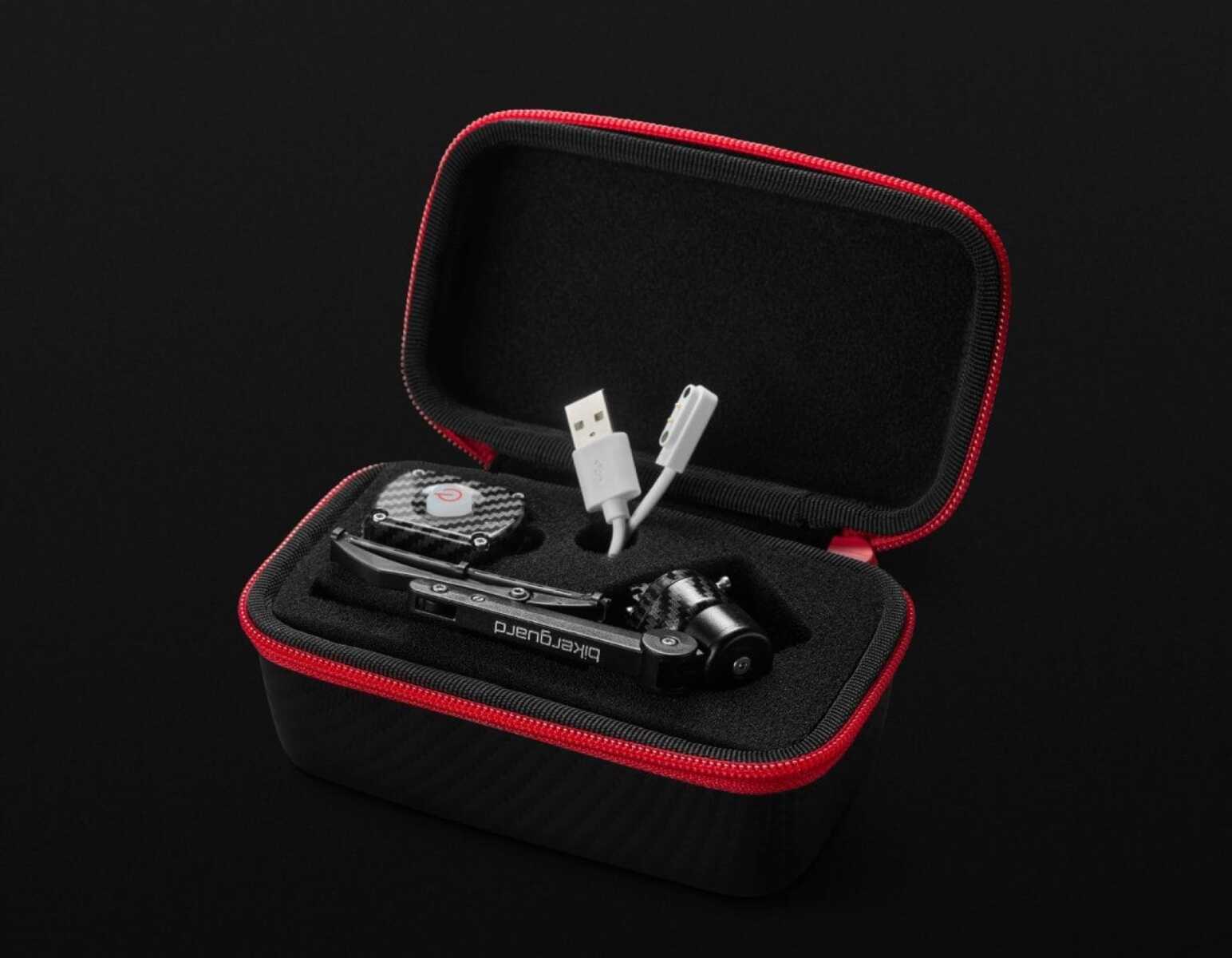
BIKERGUARD is designed around this rider-first principle: clear the visor from the handlebar, without taking a hand off the controls. Its rail mount, rechargeable battery, wireless remote, manual and automatic wiping modes, and brushless motor address the parts that matter on a wet ride.
A Clear View Is a Riding Decision
BIKERGUARD will not replace safe speed, good tires, a maintained motorcycle, or the judgment to stop when conditions exceed your limits. It gives you one more tool when rain, fog, and road spray start stealing information from your eyes.
The best time to think about visibility is before the forecast turns ugly. Set up your helmet, test your controls, maintain your visor, and ride knowing that when the water builds, BIKERGUARD is ready. Both hands stay on the handlebars. Your attention stays on the road.