
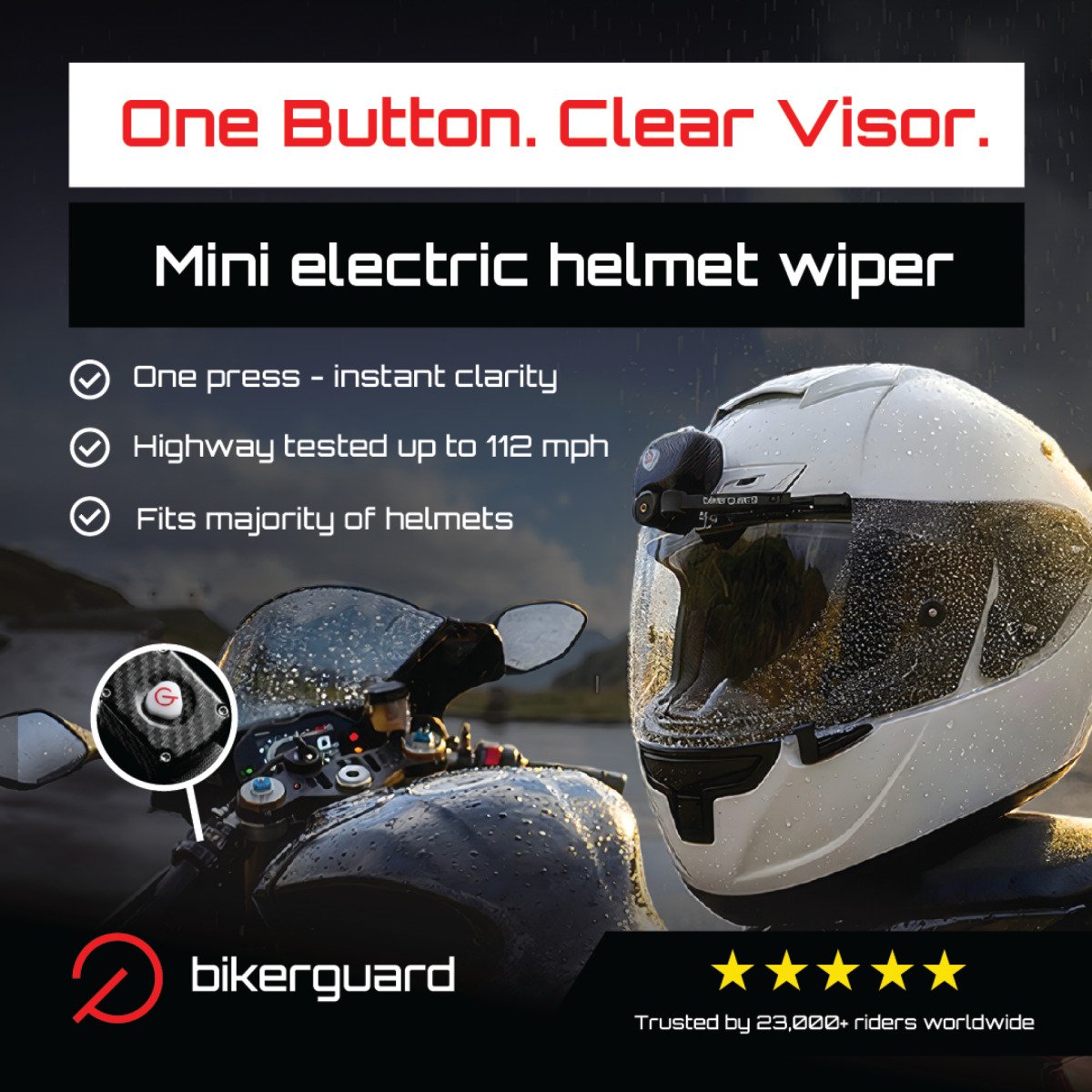
Rain does not wait for a safe stretch of road. It hits at a red light, in highway spray, on the last mile of a delivery run, and halfway through a mountain pass. A full face helmet wiper system gives riders a direct answer: clear the visor without lifting a hand from the handlebar.
That matters because visibility problems rarely arrive one at a time. Rain beads collect on the outside of the shield. Cold air fogs the inside. Trucks throw dirty spray. Headlights scatter through every drop. What starts as a minor annoyance can quickly hide brake lights, lane markings, potholes, and the edge of the road.
Why wiping a visor by hand is not a solution
Most riders have tried the same moves. A quick swipe with a glove. A finger wiper dragged across the shield. A head tilt to let wind push water aside. Each one works for a moment, if it works at all. Then the water returns, often as a smear that catches glare worse than the original droplets.
The bigger issue is control. Taking one hand off the bar to wipe a visor means doing less with the controls at the exact moment traction, traffic, and sightlines are already compromised. On a slick commute, in stop-and-go delivery traffic, or while passing a truck, that is the wrong trade.
Rain-repellent coatings can help water bead and roll away at speed. They are useful as part of a visor-care routine, but they are not an active clearing system. At low speeds, in mist, or behind heavy road spray, beads can stay exactly where you do not want them. Coatings also wear off, need careful application, and may not suit every visor material or manufacturer recommendation.
A powered wiper changes the job. One press clears the viewing area. Your hands stay where they belong - on the handlebar.
What a full face helmet wiper system does
A full face helmet wiper system is a compact, electric device mounted externally to a compatible full-face helmet visor area. A small motor drives a wiper blade across the shield, clearing rain, mist, and road spray from the rider's line of sight. Rather than asking the rider to adapt to bad visibility, it actively removes the obstruction.
The best systems are designed around the realities of motorcycle use. They need to be compact enough not to dominate the helmet, strong enough to work against moving air, and simple enough to operate through gloves. Wireless control is especially valuable because it lets a rider trigger a wipe without reaching toward the helmet.
BIKERGUARD uses a rail-mounted mini electric wiper design with a Japanese brushless motor, rechargeable battery, and wireless remote. Riders can select manual wiping when conditions change suddenly or use automatic intervals when rain is steady. The point is not to add another gadget to the bike. It is to protect the one thing every rider needs before making the next decision: a clear view.
Manual control for sudden spray
Manual mode is for the moments that do not give you warning. A car cuts through a puddle. A truck sends a wall of road grime across your visor. Drizzle turns into hard rain as you enter an exposed stretch of highway. Press the control, clear the shield, and keep moving.
This is a meaningful advantage over waiting for airflow to do the work. Wind may clear water at highway speed, but it cannot be trusted in city traffic, during a slow turn, or when the spray is oily and dirty.
Automatic wiping for steady weather
Constant rain creates a different problem. Reaching for a control every few seconds becomes its own distraction. Automatic wiping intervals keep the viewing area clear while you focus on braking, scanning, and positioning.
It is not always necessary to run an automatic mode. In light rain, an occasional manual wipe may be all you need and may help preserve battery. In sustained wet weather, automatic clearing makes more sense. Good equipment gives the rider that choice instead of forcing one setting for every ride.
What to look for before buying
Not every helmet-mounted device belongs on every helmet. Start with compatibility. A system should be intended for full-face helmets and installed without interfering with the visor's normal opening, closing, seal, or locking mechanism. Check the available mounting surface and follow the installation instructions exactly.
Motor quality matters because a wiper that stalls in wind or skips across the visor becomes another distraction. A brushless motor is a practical choice for a compact visibility tool because it is built for efficient, consistent operation. The blade also needs to contact the visor evenly without excessive pressure that could affect the shield.
Battery performance deserves the same practical scrutiny. Think about your longest realistic day, not just a short fair-weather ride. A system rated for up to 12 hours of use can cover extended commuting, touring, and shift work, but run time will vary with wipe frequency, mode, weather, and temperature. Recharge before a wet ride rather than treating the battery as an afterthought.
Water resistance is equally non-negotiable. This device is supposed to operate when weather gets ugly. Look for a system engineered to resist rain exposure, along with controls that can be used with gloves. A small remote is only useful if you can find and press it without taking your attention off the road.
Finally, consider speed performance. A visor wiper should not be limited to crawling city traffic. If you ride highways, choose a system tested to remain stable at highway speeds. BIKERGUARD reports testing at up to 180 km/h, but your own riding conditions, helmet shape, installation, and local speed limits still matter.
Installation should not become a weekend project
A safety upgrade only helps if riders will actually install and use it. A rail-based system can typically be fitted quickly with careful positioning and a clean mounting surface. Take your time with alignment. The wiper's sweep needs to cover the part of the visor you use to scan the road, mirrors, traffic lights, and corners.
Before heading into rain, test the wiper at home. Open and close the visor fully. Confirm that the blade moves freely and that the remote responds while you are wearing your usual gloves. Check that the mount feels secure. Then test it in daylight before relying on it in a dark storm.
Keep the visor clean as well. A wiper clears water, but it cannot make a scratched, hazy, or dirty shield optically sharp. Use visor-safe cleaning products and replace a worn visor when glare and scratches begin to compromise your vision. The system works best as part of a serious visibility setup that includes a clean shield, effective anti-fog strategy, and gear suited to the weather.
Who benefits most from a helmet visor wiper?
Daily commuters know the pressure of leaving on time regardless of the forecast. Delivery riders know that rain does not pause orders or shorten a shift. Touring and adventure riders can spend hours far from shelter, where weather changes faster than route plans. Public-safety and emergency-service riders may need to move toward difficult conditions, not away from them.
For all of them, the benefit is the same: less time riding through a compromised view. A visor wiper does not replace good judgment. It does not make standing water, ice, poor tires, or aggressive traffic safe. It does remove one avoidable source of distraction when conditions are already demanding.
There is a trade-off, of course. You are adding a mounted component, a battery to charge, and a blade to inspect over time. Riders who only travel in dry weather may not need it. But for anyone whose schedule, work, or route includes real rain, fog, mist, and road spray, that maintenance is a small price for controlled, on-demand clarity.
The next time rain starts turning your visor into a wall of glare, do not make wiping it with a glove your plan. Set up your helmet before the weather closes in, test it before the next storm, and give yourself the clear view needed to make the next safe move.