
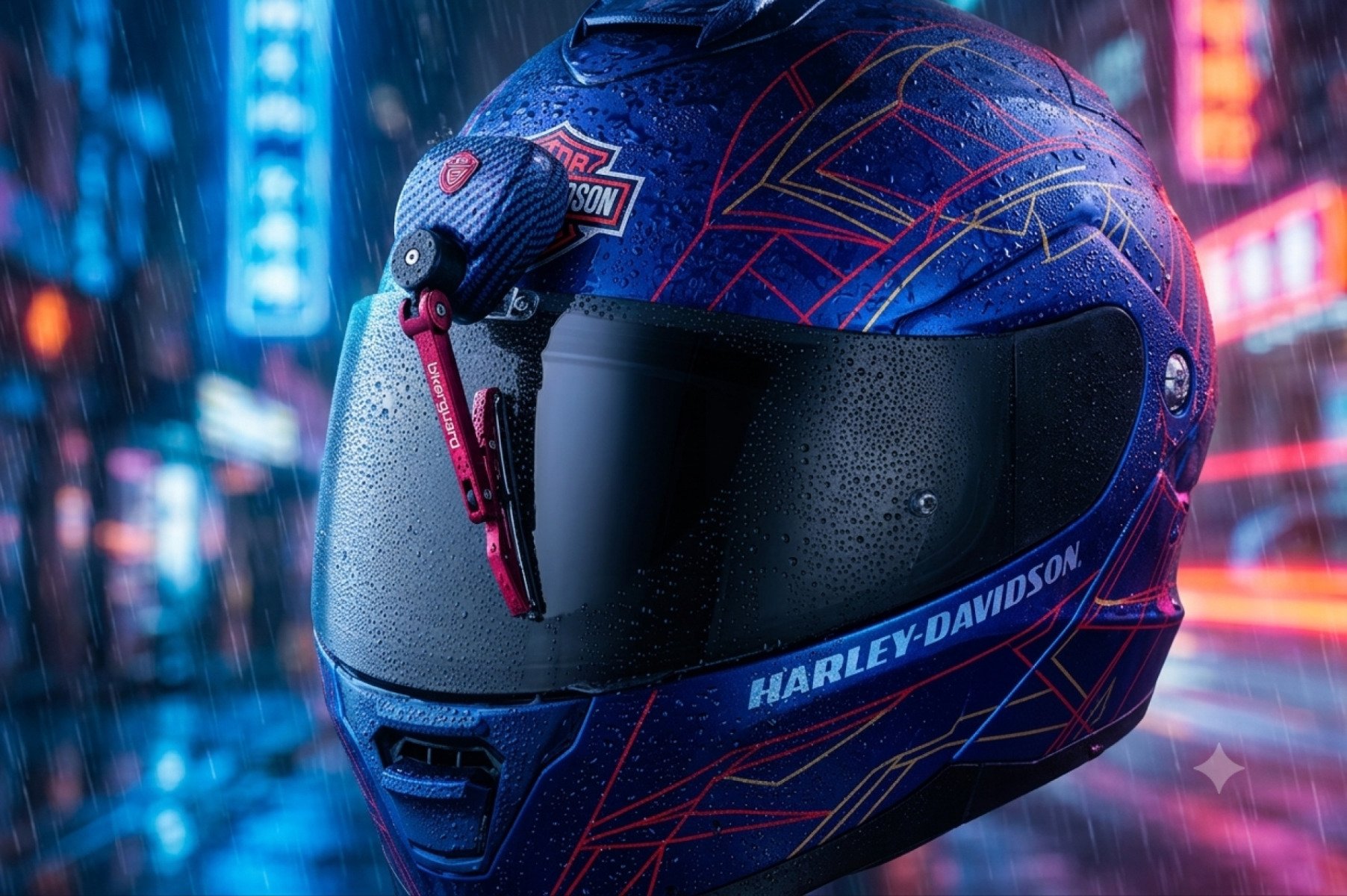
Rain does not wait for a safe stretch of road. It hits at a stoplight, in a fast corner, behind a semi throwing dirty spray, or halfway through a delivery run with the clock working against you. A helmet wiper gives you a direct response: clear the visor with a button press while both hands stay where they belong - on the handlebars.
That matters because impaired vision is not just uncomfortable. Rain droplets distort headlights. Mist hides lane paint. Road spray turns a clean visor into a moving blur. When you are trying to read traffic, judge distance, and spot surface changes at speed, every second spent fighting your visor is attention taken away from the road.
Why a Wet Visor Is a Real Safety Problem
Most riders know the instinctive moves. You tilt your head into the wind. You wipe the visor with a glove. You lift a hand at a red light, then repeat it again a mile later. In light rain, those workarounds may buy a few seconds. In steady rain or behind traffic, they fail fast.
Glove wiping can smear water, grit, and oily road film across the visor. Head tilting only works when airflow is strong enough and the rain is coming from the right direction. At low speed, in city traffic, or during a cold, wet commute, neither option delivers reliable visibility. More importantly, neither keeps your focus fully on riding.
The risk is higher at night. Water droplets refract light from headlights, brake lights, and streetlamps. What should be a clear signal becomes glare and halos. Add fogging on the inside of the shield and spray on the outside, and the usable part of your field of view can shrink quickly.
A clear visor is not a luxury feature. It is part of your riding safety system, just like tires, brakes, gloves, and a properly fitted helmet.
What a Helmet Wiper Does Differently
A powered visor wiper is built to remove water and moisture from the outside of a full-face helmet visor on demand. Rather than relying on wind, chemical coatings, or a hand off the bar, it moves a small wiper blade across the viewing area. One press clears the water in front of your eyes.
That makes it especially useful when conditions keep changing. A rain-repellent treatment can help droplets bead up, but it may need reapplication, and performance varies with visor material, speed, contamination, and weather. It cannot actively clear the road film that collects behind trucks or in dense urban traffic.
A visor insert can address internal fogging, but it does not remove rain from the exterior. A helmet wiper addresses a different problem: the water, mist, and spray directly blocking your view outside the shield. Riders facing both issues should treat them as separate visibility challenges and prepare accordingly.
The right system should be compact, secure, and made for helmet use rather than adapted from a larger vehicle. It should also leave the rider in control, with easy access to manual wiping when a sudden splash hits and automatic intervals for persistent rain.
When a Helmet Wiper Makes the Biggest Difference
A helmet wiper earns its place when riding cannot simply stop because the weather turned. For a commuter, that can mean leaving work under a dark sky and needing to reach home safely. For a delivery rider, it can mean staying productive without repeatedly pulling over to clean a visor. For touring and adventure riders, it means a storm front does not have to dictate the entire day’s route.
It is also practical for riders in professional roles. Patrol, security, emergency response, and other duty-based riders may have to operate when visibility is poor. They need equipment that reduces distraction rather than adding another task to manage.
Highway speed is only part of the story. Rain visibility can be worse at low speed, where there is less airflow to move droplets away. Stop-and-go traffic, toll booths, construction zones, and crowded city streets are exactly where riders need to see clearly and keep a firm grip on the controls.
What to Look for in a Helmet Wiper System
Not every visor-clearing solution is equally useful in real weather. Focus on the details that affect safety, fit, and daily usability.
Stable mounting and visor compatibility
A helmet-mounted unit needs a secure rail or mounting method that stays in place through vibration, wind pressure, and repeated use. It should be intended for full-face helmet visors and designed to avoid interfering with normal visor opening and closing. Before installing any accessory, confirm that it fits your specific helmet shape and visor setup.
A fast install is valuable, but do not treat speed as the only test. Take time to position the unit correctly. The blade should clear the section of the visor you use most without obstructing your view when parked.
Controls you can use without looking down
A wireless remote control is more than a convenience. In rain, you should not need to search for a tiny switch on the helmet or remove a glove to operate the system. The control should be easy to reach from the handlebar, where you can activate a wipe while maintaining your riding position.
Manual and automatic modes serve different situations. Manual wiping gives you an immediate response to a splash, passing truck, or burst of rain. Automatic wiping is useful when drizzle or mist keeps rebuilding across the visor. The best choice depends on the conditions, but having both puts the decision in the rider’s hands.
Battery life and weather resistance
A rechargeable battery should last through the kind of ride you actually take. A quick trip across town is one thing. A full work shift, long commute, or multi-hour touring day is another. Check runtime expectations, charging routine, and whether the device is designed to handle regular exposure to rain.
Water resistance matters, but it does not eliminate the need for care. Keep charging contacts clean, inspect the blade for wear, and follow the manufacturer’s instructions after extended wet riding. A wiper is a visibility tool, not a reason to ignore basic helmet maintenance.
A motor built for repeated use
The motor is the working core of the system. A compact brushless motor is a strong choice because it is designed for efficient, repeated operation with fewer wear points than many brushed alternatives. That is useful for riders who may use the wiper every day, not just once in an occasional storm.
BIKERGUARD’s compact electric visor-wiper system pairs a Japanese brushless motor with wireless control, rechargeable power, and manual or automatic wiping modes. The point is not adding another gadget to your helmet. The point is taking a recurring visibility problem out of your hands.
Use It as Part of a Full Visibility Routine
A helmet wiper works best on a clean visor. Start with a visor-safe cleaner and a soft cloth. Dirt trapped on the surface can cause smearing and add unnecessary wear to any wiper blade. If you use anti-fog protection inside the visor, apply it according to its instructions and keep it separate from the exterior cleaning process.
Before riding in rain, check the blade’s contact with the visor. Make sure the mount is secure, the remote is positioned where you can reach it naturally, and the battery has enough charge for the ride ahead. These are small checks, but they are easier to make in the driveway than during a downpour.
Do not confuse clear vision with invincibility. Heavy rain still reduces tire grip, lengthens braking distances, and hides potholes, paint lines, and standing water. Slow down, increase following distance, use smooth inputs, and give yourself more time to react. The wiper clears your view. You still need to ride for the conditions.
Stop Managing Rain With One Hand
A rider should not have to choose between a clear visor and a secure hold on the motorcycle. When rain, fog, or vehicle spray starts covering your field of view, the safest response is the one that restores sight quickly without adding distraction.
A helmet wiper will not change the weather. It changes what you have to do when the weather turns against you: one press, a clearer view, and both hands ready for the road ahead.