
Rain riding changes fast. A road that felt predictable five minutes ago can become a reflective, low-grip surface where brake lights blur, painted lines shine, and truck spray erases your view. Waterproof gear matters, but it does not solve the problem in front of your eyes: seeing clearly enough to make the next safe decision.
For commuters, delivery riders, touring riders, and anyone who cannot schedule life around a weather app, wet-weather skill is not about being fearless. It is about removing avoidable risk before the rain starts and staying disciplined once it does.
Rain Riding Starts With Visibility
Rain does more than put drops on a visor. It bends light from headlights, traffic signals, and reflective pavement. At night, that distortion can make distance and speed harder to judge. Add internal fog, oily road mist, or spray from a passing SUV, and a rider can lose clear sight exactly when traffic conditions become less forgiving.
The usual reactions are familiar: wipe the visor with a glove, tilt your head into the wind, lift the visor at a stop, or wait for water-repellent coating to do its job. Every option has a limit. A glove can smear grime across the visor. Head movement changes your attention rather than clearing the problem. Opening the visor lets in rain and cold air. Coatings wear off and often perform differently at city speeds than they do on an open highway.
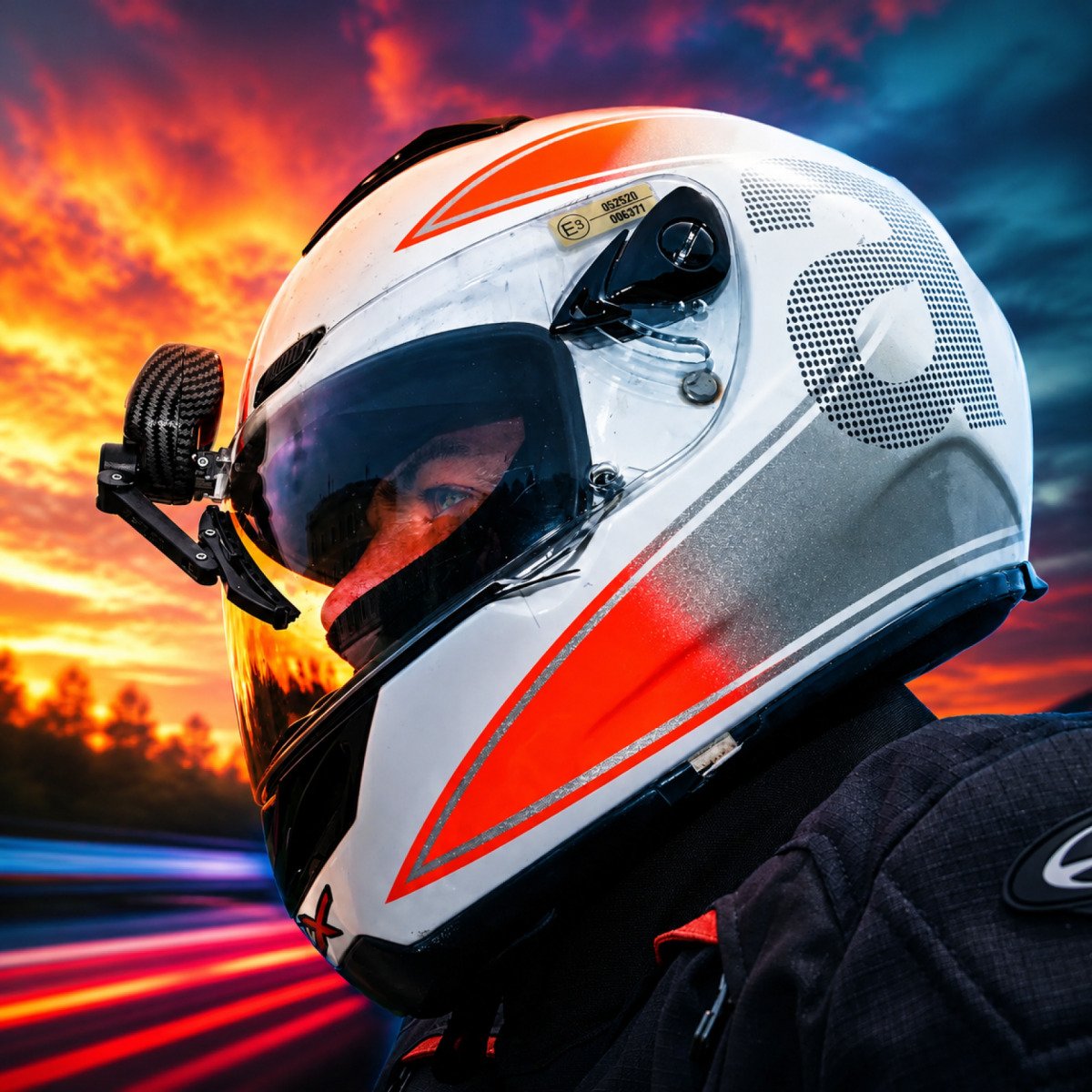
Your hands should not leave the controls to chase a clear view. In sustained rain, a powered visor wiper provides a more direct answer: press a control and clear the water while keeping both hands where they belong - on the handlebar. BIKERGUARD’s helmet-visor wiper is built for that purpose, with manual and automatic wiping modes for riders who need vision on demand rather than another workaround.
Prepare the visor before the weather turns
Start with a clean visor, inside and out. Road film, fingerprints, and old product residue turn rain into a hazy sheet, so use a visor-safe cleaner and a soft microfiber cloth. Check for scratches as well. Fine scratches may look harmless in daylight, but they scatter headlight glare after dark.
A properly fitted full-face helmet is equally important. If cold, wet air constantly enters through a poor seal, fog will return no matter how often you clear the outside. Use the helmet’s ventilation deliberately. In cool rain, a small intake opening can reduce fogging without flooding the inside of the visor.
Carry a clear visor if your normal shield is tinted. A dark visor that feels comfortable under summer sun can become a serious liability under cloud cover, in a tunnel, or when a storm arrives late in the day. Wet-weather visibility is not the place to compromise for style.
Adjust Your Riding Before Grip Disappears
The biggest mistake in rain is riding as though the road is merely dry pavement with water on top. Grip is reduced, but more importantly, it is less predictable. The first rainfall after a dry spell can lift oil, dust, and fuel residue to the surface. Intersections, gas stations, toll booths, and heavily traveled lanes deserve extra caution.
Create more space ahead of you. A longer following distance gives you more time to identify standing water, react to sudden braking, and slow progressively. It also keeps you farther from the spray cloud thrown by the vehicle in front. If you cannot see its tires clearly, you are likely too close.
Be smooth with every control. Roll on the throttle rather than snapping it open. Squeeze the brakes progressively and keep the motorcycle as upright as practical before asking for significant braking force. Abrupt inputs are what overwhelm available traction. If your bike has ABS or traction control, use those systems as valuable backup, not permission to ride aggressively.
Painted lane markings, crosswalk stripes, metal utility covers, bridge grates, and wet leaves can all be slick. You do not have to panic when you cross them. Avoid sudden braking, acceleration, or sharp lean while on them. Look through the hazard, keep the bike settled, and let it pass beneath you.
Slow down for standing water, not just heavy rain
A light rain can be more slippery than a hard downpour. Heavy rain can also hide potholes, broken pavement, and deep puddles. Never assume a puddle is shallow because it looks calm. It may conceal a hole, a curb edge, or debris that can deflect the front wheel.
When you cannot avoid water, reduce speed before entering it, keep a neutral throttle, and avoid steering corrections unless they are necessary. Do not follow vehicle tracks blindly. Tire ruts can collect water, while the center of a lane may hold oil residue. Read the road and choose the cleanest, most predictable line available.
Make Braking a Process, Not a Panic Response
Wet-weather braking begins earlier. Scan farther ahead for traffic compression, changing lights, and vehicles preparing to turn. The goal is not to prove how quickly your motorcycle can stop. The goal is to avoid needing maximum braking on an uncertain surface.
Use both brakes in a controlled, progressive application. As speed drops, gradually release pressure rather than holding a hard squeeze to the last moment. Keep your eyes up. Fixating on a bumper, a puddle, or a guardrail makes it easier to ride directly toward it.
After riding through deep water, lightly apply the brakes when it is safe to do so. This helps dry the rotors and confirms that normal braking response has returned. Give yourself extra room until you know exactly how the bike feels.
Clothing Is a Safety System, Too
Cold rain drains concentration. Once your gloves are soaked and your body starts shivering, fine control becomes harder and decision-making gets slower. Good rain gear is not a comfort upgrade. It is equipment that helps you stay alert through the last miles of the ride.
Choose waterproof outer layers that do not flap excessively at speed, and make sure your cuffs, collar, and boot openings seal well. Water entering through one gap can soak the layers underneath. Waterproof gloves should still allow you to operate switches, levers, and touchscreen navigation without fumbling.
Use high-visibility accents or reflective material when conditions are gray. Rain reduces contrast for drivers, especially at dusk. You cannot control whether another driver is paying attention, but you can make your position easier to detect.
Know When Rain Riding Should Stop
Not every wet ride is a ride worth continuing. Pull over or delay departure when visibility is so poor that you cannot reliably read traffic, lane markings, or the road surface. Severe crosswinds, lightning, flooded roads, hail, and rapidly pooling water are not conditions to push through for a deadline or a schedule.
There is a difference between accepting ordinary rain and gambling on conditions beyond your margin. A safe rider makes that call early, before fatigue, frustration, or low fuel turns a manageable situation into an emergency.
Rain will always reduce the margin for error. That is precisely why the right routine matters: clear visor, controlled inputs, more space, and no unnecessary distractions. When the weather closes in, give yourself the clearest view possible and let every action on the bike be calm, deliberate, and early.